Visit Tongue Fu Talking®
The phrase a culture of oracy has become increasingly popular.
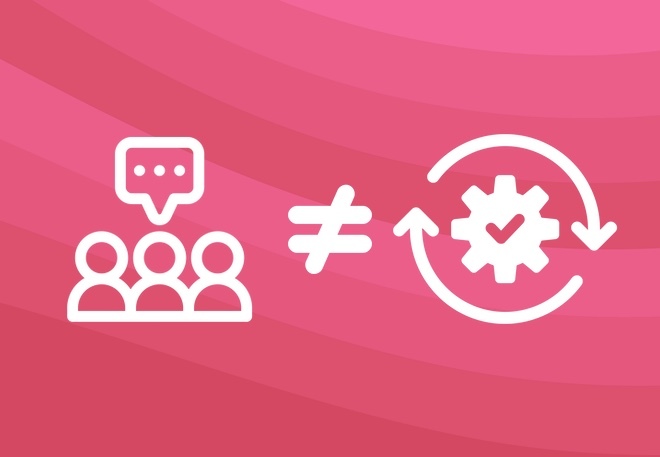
The problem is that a culture is not a curriculum.
A culture tells us that something is valued. It tells us nothing about what is taught.
The same is true of phrases such as talk-rich classrooms, student voice and opportunities for talk. These may describe desirable conditions, but they do not describe learning.
A curriculum, by contrast, answers a very different question:
What are students expected to learn?
Until that question is answered, oracy remains an aspiration rather than a curriculum.
Any serious approach to oracy should therefore be able to satisfy six tests.
Test 1: Does It Specify a Body of Knowledge?
Every curriculum begins with knowledge.
Mathematics is not defined by mathematical opportunities. Science is not defined by scientific opportunities. Both are defined by bodies of knowledge that students are expected to acquire.
Communication should be no different.
If oracy is to be taught, schools must first identify the knowledge and practices that constitute effective communication.
Without a clearly specified body of knowledge, progression becomes unclear and assessment becomes impossible.
The first test is therefore simple:
Can you clearly describe what students are expected to learn?
A Note on Disadvantage:
Advocates of oracy frequently argue that it can help close educational gaps between students.
There is considerable merit in this claim. Students arrive at school with vastly different experiences of language, conversation and communication.
The question is how schools should respond.
One response is to create more opportunities for talk.
Another is to make the knowledge and practices of effective communication explicit.
The second approach is more likely to promote equity.
Opportunities alone do not guarantee learning. Indeed, students who already possess strong communication knowledge are often best placed to benefit from unstructured discussion.
A curriculum takes a different approach. It identifies the knowledge that matters and ensures that all students are taught it.
In this sense, the purpose of an oracy curriculum is not merely to encourage communication. It is to democratise access to it.
The knowledge of how to explain, justify, question, challenge, listen, adapt and persuade should not depend upon family background, personality or chance.
It should be taught.
Test 2: Does It Give Students Something Worth Talking About?
Students do not communicate in the abstract.
They communicate about ideas, concepts, problems, texts, events and experiences.
For this reason, standalone oracy lessons should be approached with caution.
Communication divorced from content quickly becomes performance without substance.
Similarly, opportunities for talk have little educational value unless they advance learning.
The purpose of discussion is not discussion itself.
The purpose is to deepen understanding.
A debate is not a curriculum.
A podcast is not a curriculum.
A presentation is not a curriculum.
These are simply vehicles through which learning may occur.
Their value depends entirely upon what students are expected to learn through them.
A serious oracy curriculum therefore treats communication as inseparable from curriculum content.
Students should learn subject knowledge, learn how knowledge is constructed within disciplines and learn how communication helps them achieve both.
Test 3: Does It Teach Communication Knowledge?
While communication depends upon content, content alone is not enough.
Students also need to learn how communication works.
They need to understand how vocabulary creates precision, how structure supports clarity, how reasoning strengthens an argument, how listening contributes to understanding and how language changes according to audience and purpose.
These are not simply habits that emerge naturally through participation.
They are forms of knowledge that can be taught explicitly.
A serious oracy curriculum therefore teaches not only subject knowledge, but knowledge about communication itself.
Test 4: Does It Develop Metacognition?
The most effective communicators do more than speak.
They think about speaking.
They plan what they intend to say.
They monitor how their message is being received.
They adapt their language when necessary.
They reflect on whether they have communicated successfully.
Communication is therefore deeply metacognitive.
Students need opportunities to think about how communication works, why particular approaches are effective and when alternative approaches may be more appropriate.
A serious oracy curriculum develops this awareness deliberately rather than leaving it to chance.
Test 5: Does It Specify Progression?
If communication can be taught, it should be possible to describe how it develops.
A curriculum requires more than a list of desirable outcomes. It requires a sequence.
What should students know at eight that they did not know at four?
What should they know at fourteen that they did not know at seven?
How does communication become more sophisticated as students mature?
Without answers to these questions, schools are left with aspirations rather than progression.
A serious oracy curriculum makes development visible.
This is why Tongue Fu Talking® is organised into four progressive stages: White Belt, Green Belt, Brown Belt and Black Belt.
The purpose of the belts is not motivational. Their purpose is curricular.
They describe increasingly sophisticated communication knowledge and practices from EYFS to KS3.
Test 6: Does It Make Assessment Possible?
Assessment is often discussed as though it were the starting point.
In reality, it is the final step.
Before communication can be assessed, the curriculum must first be specified.
The knowledge must be identified.
The progression must be described.
The stages of development must be exemplified.
Only then can meaningful assessment take place.
Otherwise, assessment quickly becomes subjective. One teacher values confidence. Another values clarity. A third values participation.
A serious curriculum reduces this uncertainty by making expectations explicit.
This is why Tongue Fu Talking® includes student expectation documents, exemplification materials, formative assessment tools and assessment resources.
Assessment becomes possible because learning has first been defined.
Applying the Six Tests
Tongue Fu Talking® was designed as a Structured Oracy System rather than a collection of activities. It was built to satisfy each of the six tests outlined above.
Test 1: Does it specify a body of knowledge?
Yes. The four disciplines, The Stance, The Flow, The Mind and The Bond, define the knowledge and practices that constitute effective communication. These are further broken down into twenty-three teachable practices.
Test 2: Does it give students something worth talking about?
Yes. Communication is taught through curriculum content rather than in isolation. Debates, discussions, presentations and other activities are used to deepen subject knowledge, develop disciplinary thinking and strengthen communication practices.
Test 3: Does it teach communication knowledge?
Yes. Students are explicitly taught how communication works, including vocabulary, structure, reasoning, audience awareness, interaction and delivery.
Test 4: Does it develop metacognition?
Yes. The Mindwalkers framework teaches students to plan, monitor, adapt and reflect on their communication. Students learn not only how to communicate but how to think about communication.
Test 5: Does it specify progression?
Yes. The White, Green, Brown and Black Belts define increasingly sophisticated communication knowledge and practices from EYFS to KS3.
Test 6: Does it make assessment possible?
Yes. Student expectation documents exemplify progression at each stage and assessment materials help teachers recognise and respond to development.
The sequence is deliberate.
1. Knowledge.
2. Content.
3. Communication knowledge.
4. Metacognition.
5. Progression.
6. Assessment.
That is the difference between a collection of oracy activities and a serious oracy curriculum.
Conclusion
The question is not whether students are talking.
Students have always talked.
The question is whether schools can explain what students are learning when they do.
A culture of oracy may be desirable.
But culture is not a curriculum.
A serious oracy curriculum begins by defining the knowledge, practices and progression that students are expected to learn and only then considers the activities through which that learning will take place.
That is the difference between encouraging talk and teaching communication.
Visit Tongue Fu Talking®


.png)